
THE INSTITUTE FOR LINGUISTIC EVIDENCE (ILE) is the first and only non-profit scientific research organization devoted to developing and testing forensic linguistic methods. ILE conducts pioneering research and development for methods of handling language as evidence and provides validated, tested and proven methods for answering forensically significant questions.
ILE’s primary goal is finding out what linguistic methods really work to solve forensic problems like authorship or text-type authentication by testing those methods on “ground truth” data. When results show that methods are reliable, we publish those methods, their reliability, and make the methods available to the security, legal and intelligence communities through technology transfer to ALIAS Technology LLC.
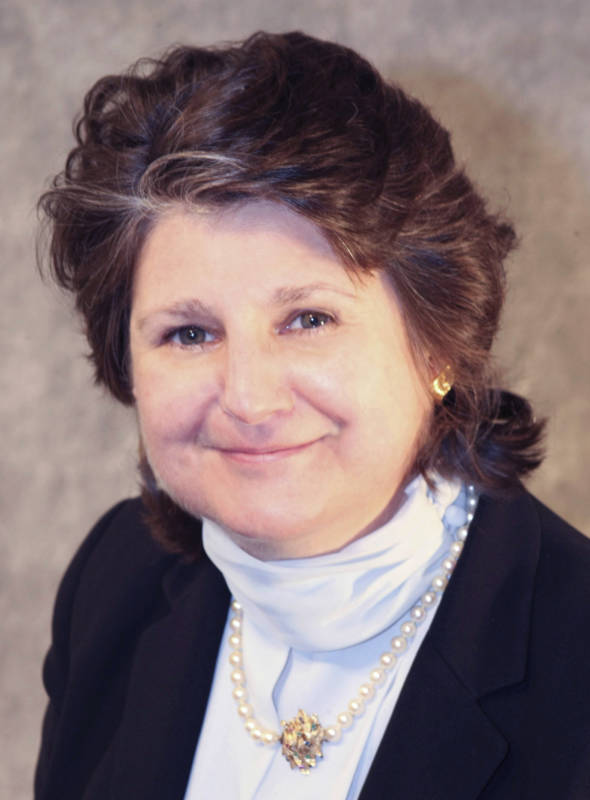
Carole E Chaski, PhD, Founder and Executive Director
ILE was founded in 1998 by Dr. Carole E. Chaski as a non-profit, scientific research organization and soon thereafter granted 501(c) 3 status by the United States Internal Revenue Service. ILE was incorporated by Joseph W. Roskos, CPA, JD as a non-profit, scientific research organization, on the 5th of June 1998 in the State of Delaware.
On the 3rd of December 2003, the Internal Revenue Service confirmed ILE as tax-exempt under section 501 (c) 3 and classified ILE as a public charity under 170 (b) (1) (A) (vi). The public charity status enables ILE to receive funding from donors, private foundations as well as government agencies. ILE has successfully maintained its tax-exempt status since it was first granted. ILE pays an annual franchise tax to the Delaware Department of State Division of Corporations and files requisite reports to the Internal Revenue Service through S. Thomas Sombar, CPA.
ILE has been funded by the United States Department of Justice National Institute of Justice, research projects for major corporations, and an endowment from private philanthropy.
Do you want justice systems to continue to reject junk science? Since its founding, ILE has been at the forefront of the movement to reform forensic science and to enable courts to reject junk science. Carole Chaski began this movement in forensic linguistics with her US government-funded research and her article, published in 1997, “Who Wrote It? Steps Toward a Science of Author Identification.” Although forensic linguistics had existed since the 1960’s and several American and British linguists were consulting as expert witnesses, the methods used by these consultants for authorship identification had never been tested to determine if the methods were reliable, until Chaski began her research, created the first forensically-feasible corpus for author identification, and actually tested the methods in double-blind experiments. These results were presented at linguistics and forensic science conferences and later published in 2001, “Empirical Evaluations of Language-Based Methods of Authorship Identification.” Through ILE’s efforts, producing the basic research about methods’ reliability, American Courts are consistently rejecting or restricting junk science in forensic linguistics. Courts around the globe are listening and refusing junk forensic linguistics.
Do you want justice systems to use reliable evidence with known error rates that a jury can use to evaluate the evidence? Again, since its founding, ILE has been at the forefront of the movement to develop reliable methods in forensic linguistics. Carole Chaski developed a reliable method for forensic author identification, published in 2005 in the article “Who’s At the Keyboard?” and subsequently gained a US patent for the methodology. Through ILE’s efforts, producing the basic research about methods’ reliability, American Courts are consistently admitting testimony based on this method, without any restriction on the testimony. Courts around the globe are listening and acknowledging real forensic linguistics.
You can become involved with ILE in several ways. First, you can contribute data. Second, if you have a graduate degree in linguistics from a respected university, research experience as an independent researcher, and a clear research proposal, you can apply to become an ILE researcher. Third, you can join TALE: The Association for Linguistic Evidence, the only professional association in forensic linguistics. Fourth, you can read LESLI: Linguistic Evidence in Security, Law and Intelligence, the first open-source, double-blind peer-reviewed journal in forensic linguistics. Fifth, you can read and join our LinkedIN group, Forensic Linguistic Evidence.